Why Choose Locally Grown Wedding Flowers
Key Takeaways
- Locally grown wedding flowers are hand-harvested right before your big day, so they show up fuller, fresher, and more fragrant than blooms that have been flying around the world.
- Local flowers are seasonal by design, which means your colors feel like a natural extension of the time of year, not a forced look pulled off a shelf.
- Chemical-free growing keeps the soil, the pollinators, and the people harvesting your flowers healthy.
- Buying local means your money stays close to home and supports small, regenerative growers instead of big distant supply chains.
- Every arrangement is one of a kind, because no two seasons (or farms) ever offer quite the same mix.
Why Local For Your Wedding Flowers
Let’s be honest, wedding planning comes with about a hundred small decisions a day. But the flowers? Those are personal. They’re the first thing your guests notice walking in. They frame your vows. They end up in the photos you’ll be looking at for the rest of your life.
So it’s worth asking, even just for a second: where are these flowers actually coming from?
A lot of traditional wedding flowers travel a long, long way before they ever reach your venue. They’re grown far from here, sprayed just to survive the trip, and cut before they’re really ready, all so they can hold up through days of shipping. By the time they arrive, they’ve already lost a bit of their color, their scent, and honestly, their soul.
Locally grown wedding flowers are a different story. A much more rooted one.
You Can Actually Feel the Freshness
When your flowers are grown just down the road instead of flown halfway across the world, you notice it right away. Local blooms are hand-harvested at their peak, often just a day or two before your wedding, so they open fuller, smell sweeter, and hold up beautifully all day (and into the night).
There’s a softness to a locally grown peony or garden rose that just can’t be copied. You can see it in the petals. You can smell it in the air around the bouquet. It’s one of those small details that quietly makes a big difference.
Let the Season Do the Designing
One of the best parts of working with a local flower grower is letting the season take the lead. Instead of forcing a rigid, pre-decided look, going seasonal by design means your wedding palette grows naturally out of whatever the earth happens to be offering that month.
A spring wedding might lean into ranunculus, tulips, and fresh greenery. A late summer celebration might be all dahlias, snapdragons, and soft grasses. This isn’t a limitation, it’s actually an invitation to something more authentic (and honestly, more beautiful) than anything you’d find on a generic order form.
Seasonal flowers tend to bring:
- More variety in texture and shape
- Blooms that are naturally suited to the local climate, so they actually last
- A gorgeous, effortless pairing with seasonal foliage, branches, and grasses
Kinder to the Soil, the Pollinators, and the People
Behind every bouquet is a whole growing process, and that process matters more than most people realize. Local, chemical-free growing keeps the soil healthy long after your wedding day wraps up. Open-pollinated varieties support the bees, butterflies, and other pollinators that keep everything around them thriving.
That’s a pretty different picture from a lot of imported flowers, which are often treated with synthetic preservatives just to survive long-distance travel. Choosing local means choosing a gentler footprint, for the land and for the people growing and arranging your flowers.
Regenerative growing isn’t just a nice phrase. It’s a practice that leaves the ground healthier season after season, so future gardens (and future weddings) get to flourish too.
Supporting Your Own Community
There’s something really special about knowing your wedding flowers were grown by someone nearby. Someone who understands the local growing conditions, who can walk your venue with you, and who genuinely cares about how your day comes together.
Choosing a local grower also means your investment stays close to home, supporting small-scale, regenerative growing instead of a big distant supply chain. It’s a small, beautiful way to put your money where your values are.
A Design That’s Truly Yours
Maybe the most rewarding part of going local is the individuality it brings to your day. Because the blooms on hand shift with the season and the farm, no two arrangements ever really look alike.
Your florist isn’t pulling from a standardized list; she’s working creatively with what’s thriving right now, hand-selecting stems, and building something unique to you. It feels less like a catalogue order and more like a living piece of art made just for your celebration.
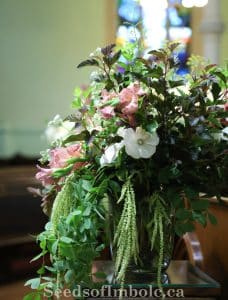
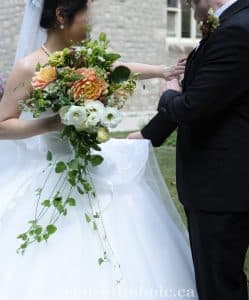
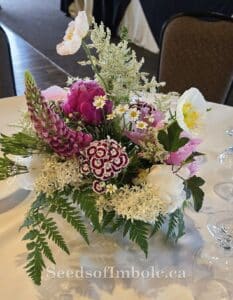
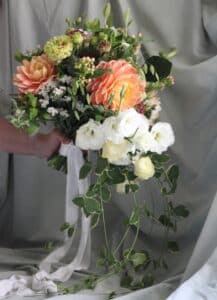
Curious what that kind of design actually looks like? Take a peek through Kat’s portfolio for a feel of the colour palettes, textures, and styles she’s brought to life for past weddings.
Wrapping Up
Choosing locally grown wedding flowers is about more than how they look, though the beauty really does speak for itself. It’s a choice that means fresher blooms, a gentler footprint on the earth, healthier soil, and a design that’s truly one of a kind. When you nurture that connection between your wedding and the land around you, it shows. Your guests will notice it. Your photos will capture it. And years down the road, you’ll remember not just how your flowers looked, but what they meant. If you’re dreaming up your wedding florals and want a creative, knowledgeable partner who grows with care, we’d love to hear from you. Fill out our wedding inquiry form and let’s start bringing your vision to life, one seasonal bloom at a time.
Kat Granger
Master Gardener Katherine Granger (aka Kat) is the creative force behind Seeds of IMBOLC in Fergus, Ont., specializing in sustainable, organic floral designs for weddings and clients who value natural beauty.
Kat’s gardening expertise has been featured on cable TV, in OMAFRA videos and speaking events like Canada Blooms. Discover her passion for gardening and sustainability through on farm experienced workshops, her “Home on the Grange” newsletter, and on Instagram and Facebook.
Find her on Facebook and Instagram.