A Spring Ritual for Persian Buttercups (Plus How to Save Corms)
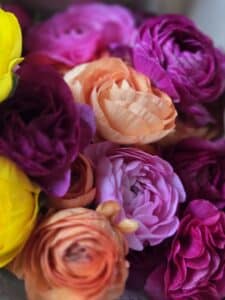
Thank you for supporting Seeds of Imbolc this spring—and for taking home one of my favourite cool-season flowers: ranunculus (also called Persian buttercups).
This post is your go-to guide for potted ranunculus care in Canada: where to place your plant, how to water it, the best temperatures for long-lasting blooms, and what to do when summer heat arrives.
If you want ranunculus flowers with strong stems and layers of petals, the secret is keeping them cool, bright, and evenly moist.
Ranunculus 101
Ranunculus grow from corms (little “claws” that store energy—similar to bulbs, but not quite the same). The plants you purchased from me were already started, so you can skip soaking and pre-sprouting this season. Your main job now is to give the plant the right conditions so it can keep pushing buds and flowers.
Temperature
Ranunculus are cool-season bloomers. They perform best when nights are crisp and days are gentle. When temperatures stay too warm (often consistently above about 16C / 60F), ranunculus naturally start to slow down and go dormant. That’s not failure; the plant is listening to the season and protecting itself from heat.
Light & Placement
Ideal nights: about 7C-13C (45F-55F)
Ideal days: about 16C-21C (60F-70F) with plenty of sun
Best spot: a bright patio, balcony, porch, or garden corner with at least 6 hours of sun (morning sun is especially kind).
Pot perk: because your ranunculus is in a pot, you can follow the weather – sunny on cool days, and a more sheltered spot on suddenly hot, windy, or stormy ones.
For best flowering, ranunculus like their root zone cool- ideally with soil temperatures below about 13C / 55F. If a warm spell rolls in, shift the pot so it gets morning sun and afternoon shade. Cooler roots often mean more buds, more colour, and a longer run of blooms.
Frost & cold snaps
Ranunculus foliage can handle a light frost, but the roots and developing flower buds are more sensitive.
If a hard freeze is forecast, protect the pot: move it into an unheated garage/shed overnight, tuck it close to the house, or cover it with a frost cloth. Avoid bringing it into a warm living room for long periods; steady indoor heat can hurry the plant toward dormancy.
Watering Potted Ranunculus
Evenly moist, never waterlogged. Water when the top 2 -3 cm (about 1 inch) of soil feels dry. Then water deeply until you see it drain out the bottom. Ranunculus dislike sitting in soggy soil, so make sure your pot has drainage holes and don t leave it standing in a saucer full of water. In cool weather you may water less; in sun and wind you may water more. The goal is steady, even moisture like a well-kept spring garden bed.
Dormancy and Saving Your Ranunculus Corms
As late spring leans toward summer, ranunculus will naturally finish flowering and begin to yellow. Let the foliage die back, stop watering. It is feeding the corm for next year. Let the pot dry out.
To save the corms for next season: gently lift them, brush off excess soil, remove dead foliage, and store them in a breathable container (paper/mesh) bag in a warm, dry place until fall planting or next spring, depending on your growing plan. The corms rest, and when the season turns again, they’ll be ready.
When Will My Ranunculus Bloom?
The ranunculus I start typically begin blooming around mid-May, but timing can shift with weather, light, and temperature. For the longest display, keep plants cool, water consistently, and deadhead (snip off spent blooms) to invite more flowers.
Troubleshooting
Lots of leaves but few buds usually mean it is too warm or not enough sun; droopy stems often mean the pot dried out; yellowing plus soggy soil can signal overwatering or poor drainage.
Soil & feeding (quick notes)
Ranunculus prefer well-draining soil and do well around pH 6.0 6.5. If you’d like, you can feed lightly every 2 -3 weeks with a balanced fertilizer at half-strength while the plant is actively growing and setting buds. Avoid heavy feeding in hot weather cool temperatures are what really drive performance.
I love seeing these buttercup blooms lighting up balconies & pots. Happy blooming!
If you share your flowers on social, tag @seedsofimbolc so I can admire what you’re growing!